

Low Ongoing Costs: What Does That Mean for You?
04 Oct 2026
A franchise can look affordable at the point of purchase and still become difficult to run if monthly overheads eat into every groom. So, when you hear low ongoing costs, what does that mean?, the real question is simpler: how much of the money you earn can stay in your business after the essential bills are paid?
For someone leaving employment, recovering from redundancy or finally acting on a long-held ambition to work with dogs, this matters enormously. You are not only buying a job. You are building a business that needs room to pay you, grow, cover quieter weeks and support the life you want outside work.
Low ongoing costs: what does that mean in franchising?
Ongoing costs are the regular expenses required to keep a business trading after its initial set-up. They are different from your upfront investment. In a dog grooming franchise, they can include franchise fees, vehicle costs, fuel, insurance, grooming consumables, mobile phone charges, card-processing fees, marketing spend, maintenance and accountancy.
“Low” does not mean there are no costs, nor should it be treated as a promise that every franchisee will make the same profit. It means the business model is designed to avoid unnecessary overheads and keep fixed monthly commitments manageable in relation to the income the business can generate.
That difference is vital. A business with high fixed costs has to earn a certain amount every month simply to stand still. A business with lower fixed costs can have more breathing space. It can cope better with seasonal dips, give the owner more control over drawings and create a clearer path towards reinvesting in growth.
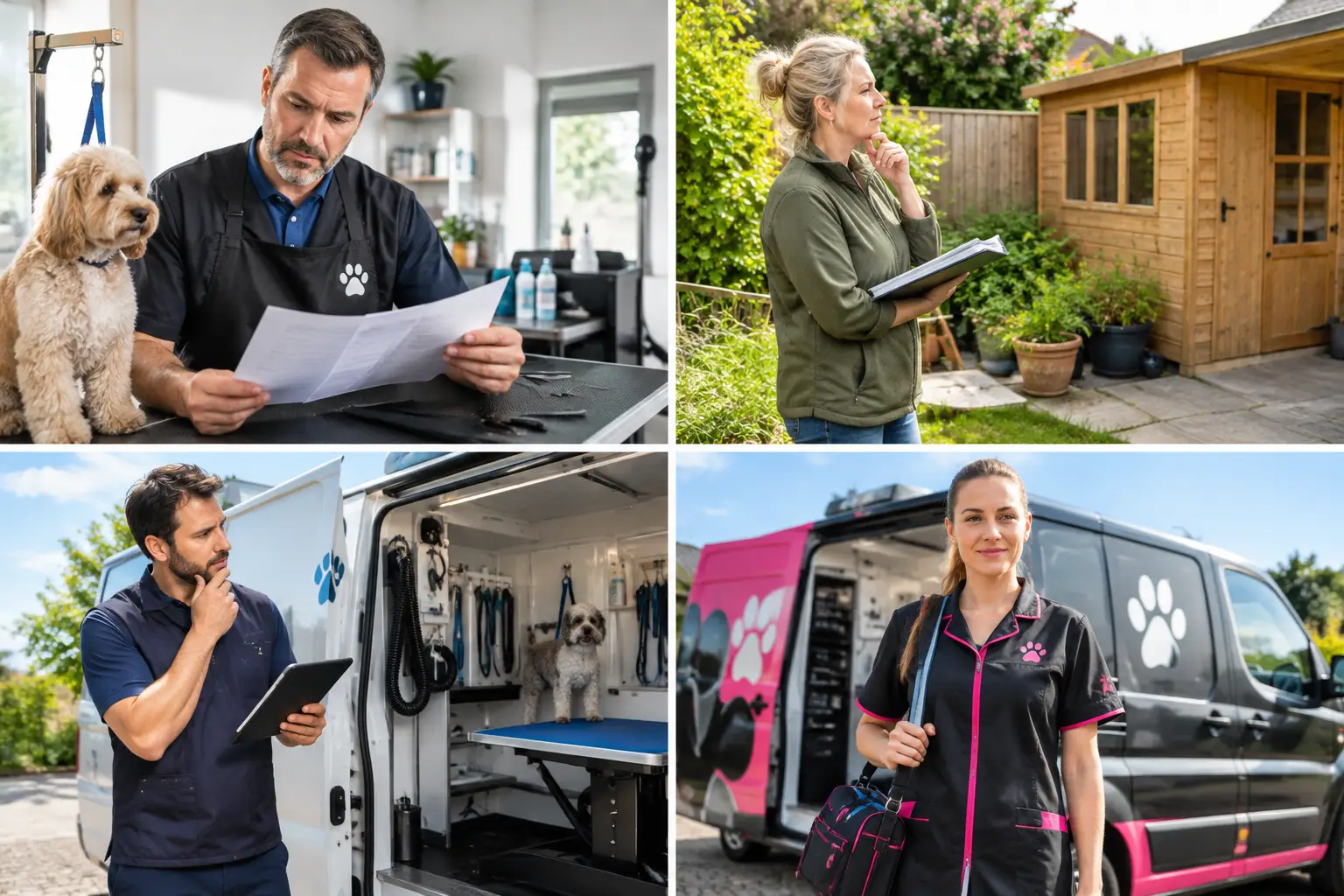
For a mobile dog grooming business, one of the biggest advantages is avoiding the cost of a high-street salon. There is no commercial lease to negotiate, no rates bill for a premises, no utility-heavy shop to heat and light, and no expensive fit-out to replace when a tenancy ends. Your professionally converted grooming van is your workplace, travelling to where customers need you.
Why the cost base can shape your income
Turnover can sound impressive, but turnover is not take-home pay. What matters is what remains after the genuine costs of operating the business.
Imagine two grooming businesses completing a similar number of appointments. One works from a salon with rent, rates, several utility bills and staffing commitments. The other operates from a mobile unit with a more focused cost base. The salon may still be an excellent business, but it has a higher monthly target before the owner sees the same return.
This is why low ongoing costs are so attractive to first-time business owners. They reduce the pressure to chase volume at any price. You can focus on delivering a professional service, building repeat custom and managing your diary properly rather than constantly worrying about covering an expensive premises.
A lower overhead model can also make scaling more realistic. Once one territory is established and operating well, the owner has a clearer picture of revenue, costs and capacity. That does not make expansion automatic, but it can make the next step easier to assess than it would be in a business carrying substantial property commitments.
The costs you should still expect to manage
A credible franchise opportunity should be open about the bills that continue after launch. Transparency is not a drawback. It is how you make a confident decision with your eyes open.
Your mobile grooming van will need fuel, routine servicing, tyres, insurance and occasional repairs. Grooming equipment needs looking after, and shampoos, towels, blades and other consumables must be replaced. You will also need to allow for mobile phone and payment costs, bookkeeping, personal tax planning and your own household income requirements.
There may be franchise payments that fund brand use, operational support, systems, marketing guidance and access to experience you would otherwise have to develop alone. These should not be viewed purely as an expense. The right question is whether the support helps you win customers, operate more efficiently and avoid costly beginner mistakes.
At Dial a Dog Wash Ireland, prospective franchisees can see set-up and monthly franchise payments from the start of their enquiry, before meeting the franchisor. That is the standard you should expect from any serious business opportunity. If costs are vague, delayed or buried in small print, pause and ask why.
Low cost is not the same as cheap
Choosing the cheapest route into self-employment can be a false economy. A poorly equipped van, rushed training or no practical support may lower the initial price, but it can create more expense, stress and lost bookings later.
A low-ongoing-cost model is about efficiency, not cutting corners. You still need quality equipment, proper insurance, professional standards and the skills to groom safely and confidently. You also need a plan for maintenance and a sensible cash reserve. Dogs do not stop needing grooming because a van needs a repair, and customers expect a reliable service.
The strongest model balances investment with control. It gives you the tools to start earning quickly while avoiding the unnecessary fixed costs that can hold a new business back. Good training and support are part of that equation because they help you deliver a service customers recommend and return to.
Questions to ask before you commit
Before joining any franchise, ask for a clear breakdown of the costs you will pay at launch and every month after. Then test the figures against your own circumstances. Your fuel use, travel distances, desired working hours and local customer demand will all affect your results.
Ask what is included in the monthly fee and what is charged separately. Find out who is responsible for van servicing and repairs, whether there are required marketing contributions, what insurance is needed, and whether you must buy supplies from particular providers. Understand the length of the agreement, renewal arrangements and the likely cost of replacing major equipment over time.
It is also worth asking how the franchise helps you get customers in the early stages. A lower cost base is valuable, but it works best when paired with a practical route to bookings. Training, territory protection, established branding, marketing instruction and continuing operational support can all help shorten the gap between starting up and building regular income.
Finally, speak to existing franchisees if you can. Ask what their actual working week looks like, which costs surprised them and what they wish they had known before starting. Their experience will not predict your own results, but it will give you a more grounded view than headline claims alone.
Protecting the advantage of lower overheads
Once trading begins, low ongoing costs remain an advantage only if you manage them well. Keep a close eye on fuel use and route planning. Group appointments by area where possible, protect time for administration and review your prices regularly so they reflect your skills, costs and local market.
Do not confuse being busy with being profitable. A diary packed with long journeys, underpriced appointments and last-minute changes can leave you exhausted without delivering the return you deserve. The goal is a well-run diary, loyal customers and enough margin to pay yourself while keeping the business healthy.
Set money aside for tax, vehicle maintenance and quieter periods from the beginning. This simple discipline prevents routine costs becoming emergencies. It also gives you choices: invest in better equipment, increase your marketing, take time off when needed or plan for a second unit when the numbers genuinely support it.
For many people, the appeal of mobile dog grooming is not just working with animals. It is the chance to own a business with a practical service, visible demand and a cost structure that does not tie them to an expensive premises. Low ongoing costs will not remove the need for effort, good customer care or disciplined money management. They can, however, give a committed business owner more room to build something worthwhile - and more confidence that the business is working for them, not the other way round.