

Franchise or Self Employment - Which Suits You?
26 Nov 2026
A job can feel safe right up until it stops giving you what you need: proper control over your time, a fair reward for your effort, or a reason to look forward to Monday. If you are weighing up franchise or self-employment, the real question is not whether you can work hard. It is whether you want to build every part of a business alone or start with a proven route, practical training and people behind you.
For many career changers, redundancy candidates, animal lovers and people over 50 who are ready to work for themselves, this decision can shape the next decade. Both options can lead to independence. They do not offer the same starting point, the same risks or the same level of support.
Franchise or self-employment: understand the difference
Self-employment means you own and operate your business. You choose the service, create the brand, set your prices, find suppliers, build a website, market the business and solve problems as they arise. That freedom is attractive, especially if you have a clear idea and experience in your chosen field.
A franchise is also self-employment, but with a recognised business model around you. You run your own business and are responsible for its results, yet you operate under an established brand and follow systems that have already been tested. You normally receive training, equipment guidance, marketing support and ongoing operational help in exchange for an initial investment and franchise payments.
So this is not simply independence versus employment. It is independent business ownership from scratch versus independent business ownership with a framework.
Starting alone gives you freedom - and every responsibility
There is a genuine appeal to building something entirely your own. You make every decision, from the name on the sign to the way customers are served. There are no franchise standards to follow and no requirement to operate within a particular territory or model.
That level of control works well for people who already know their market, have a specialist skill and are comfortable making decisions without a safety net. A seasoned groomer opening a salon, for example, may already understand pricing, customer retention, equipment, insurance, local competition and how long it takes to fill a diary.
But first-time business owners often underestimate how many jobs sit behind the job they want to do. Being good with dogs is not the same as generating enquiries. Buying a van is not the same as converting it safely and professionally. Posting on social media is not the same as building a dependable local pipeline of paying customers.
When you start independently, you must work out the answers to every question yourself. What training is essential? Which suppliers offer quality and value? How will you handle cancellations? What happens if equipment fails? Which marketing activity produces bookings rather than likes? You can learn all of this, but learning by trial and error can cost time, money and confidence.
A franchise reduces the guesswork at the start
A strong franchise does not remove the need for effort. You still need to serve customers brilliantly, manage your diary, build local relationships and take ownership of your results. What it can remove is the need to invent the entire business before you earn your first pound.
With a mobile dog grooming franchise, the structure is particularly practical. Rather than taking on the expense and pressure of a fixed salon premises, you can operate from a professionally converted grooming van. Your business goes to the customer, which is convenient for busy owners and creates a visible local presence wherever you work.
The right franchisor should give you far more than permission to use a name. Look for hands-on grooming training that prepares you for real dogs and real appointments, not just theory. Look for marketing instruction, a defined exclusive territory, clear operating systems and someone available when you need help after launch day.
Dial a Dog Wash Ireland is built around that type of practical support: training people with little or no grooming background, equipping them for mobile work and helping them move quickly into a revenue-generating service business. For someone who wants to work with dogs but does not want to spend years piecing together a business model, that is a meaningful advantage.
What are you really paying for?
People sometimes focus only on a franchise fee. That is understandable, but it is not the right comparison. The better question is what the investment replaces.
Starting alone may mean separate costs for professional training, branding, vehicle conversion, signage, booking systems, marketing, supplier research and the mistakes that come from choosing the wrong solution first time. It may also involve months spent testing whether the service, price point and marketing message work locally.
A franchise investment should be transparent. Before you commit, you should be able to see the set-up costs, ongoing payments and what is included. You should know what training you will receive, what equipment is supplied, what support continues after launch and whether the territory gives you room to develop a customer base.
Low ongoing costs can matter just as much as the initial outlay. A business needs enough margin to pay you, maintain standards and grow over time. Ask direct questions. How are payments calculated? What marketing help is available? What are the likely day-to-day running costs? What happens when you need extra guidance? A credible franchise business will welcome sensible questions rather than rush you towards a decision.
The biggest trade-off: flexibility versus proven systems
If you choose self-employment from scratch, you can change direction whenever you like. You can offer different services, create a new brand identity or alter every part of the customer experience. That is useful if your success depends on a highly individual idea.
With a franchise, consistency is part of the value. Customers know what to expect from the brand. Franchisees benefit from procedures designed to protect service quality and reputation. You may have less freedom to experiment, but you have clearer standards, less uncertainty and a business that customers can recognise.
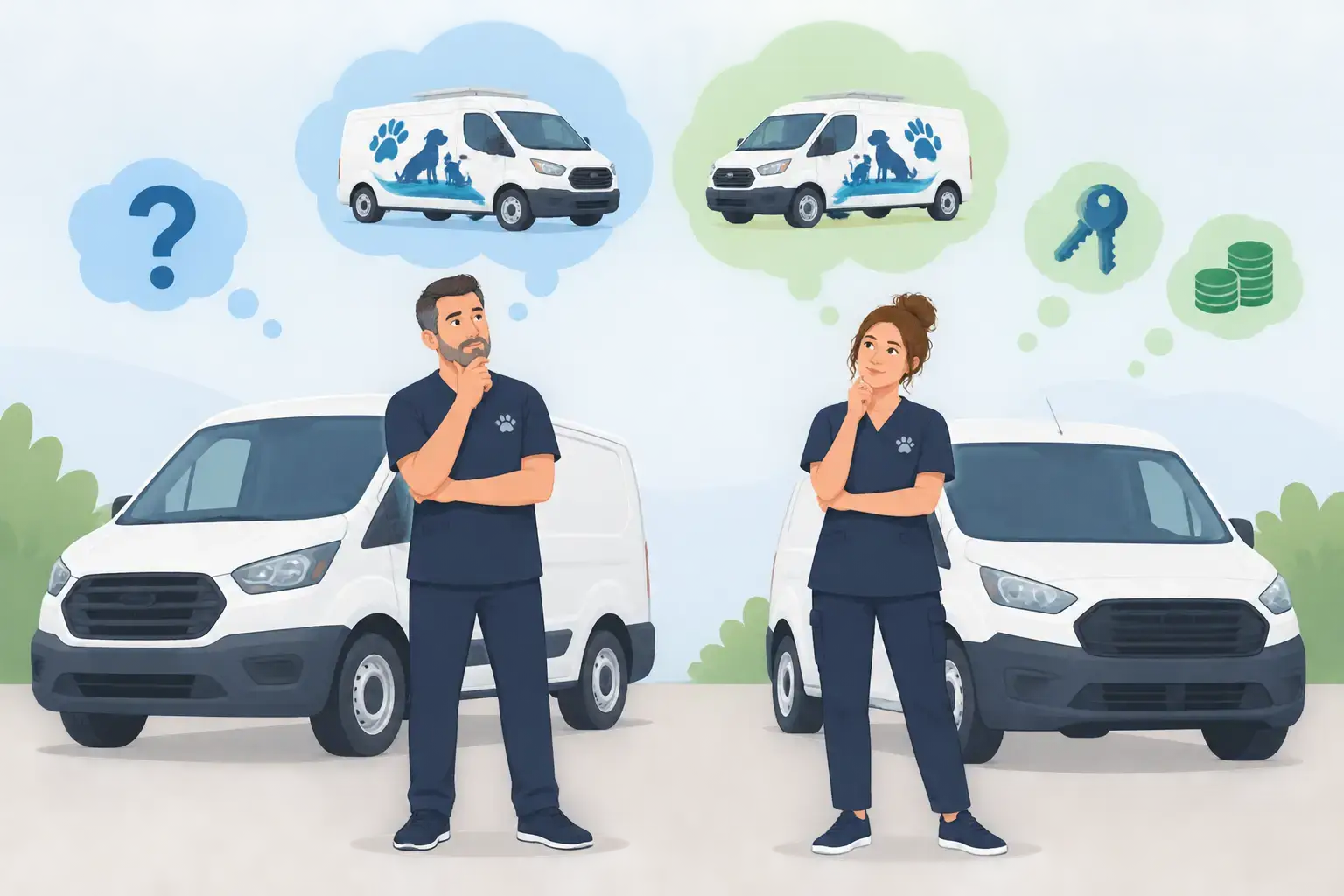
Neither route is automatically better. It depends on what you need most at this stage of life. If you have deep sector experience, strong business confidence and time to build slowly, independent self-employment may suit you. If you want a clearer path into business ownership, coaching from people who know the industry and the ability to begin serving customers quickly, a franchise could be the more sensible route.
Ask yourself these questions before deciding
Be honest about where you are starting from. Do you have the skills to deliver the service confidently from day one, or do you need intensive practical training? Can you afford to spend months developing a brand and testing marketing, or do you need a business model with a defined launch plan? Would you rather create your own systems, or would you prefer to follow systems that let you focus on customers and income?
Also think beyond the first year. A good business should support the lifestyle you want, not merely replace one demanding job with another. Mobile grooming can offer a route to local, repeat custom and a service that fits around real people’s lives. As your diary grows, it can also give you options to build a lasting asset rather than simply sell your hours.
Age should not put you off either. Many mature career changers bring exactly what a service business needs: reliability, patience, customer skills and the determination to make a calculated move after years of working for someone else. You do not need to have followed a traditional business path to become a capable business owner.
Choose support that helps you act
The best time to examine a business opportunity is before you have handed over any money. Request the information, study the numbers, ask what daily work really looks like and speak openly about your goals. Do not choose a route because it sounds easy. Choose one because the training, costs, support and service model give you a realistic platform to succeed.
Working for yourself should feel like a positive step forward, not a leap made in the dark. Whether you build independently or join a franchise, choose the path that gives you the confidence to start properly, serve customers well and keep moving when the early questions arrive.