

Dog Grooming Van Conversion Guide for New Owners
10 Nov 2026
A mobile grooming van is not simply a vehicle with a bath in the back. It is your workplace, your shopfront and the foundation of the service customers will pay for. This dog grooming van conversion guide covers the decisions that make a van practical, professional and ready to generate income - particularly if you want to enter the grooming industry without spending years working it all out alone.
For aspiring business owners, the appeal is obvious. There is no expensive salon lease, no waiting for customers to find you and no need to be tied to one location. You take a convenient, high-quality service directly to dog owners. But a poorly planned conversion can create daily problems with space, water, power and safety. Get the set-up right from day one and every appointment becomes easier to manage.
Start With the Business, Not the Van
The first question is not, “Which van looks best?” It is, “What service am I building?” A mobile groomer needs enough room to wash, dry, groom, clean down and welcome dogs safely, all while carrying water, equipment and consumables. The vehicle must also be reliable enough for a full diary of local appointments.
A compact van may cost less to buy and fuel, but limited working space can become frustrating when you are handling larger breeds or several dogs a day. A larger van offers more room for equipment and a more comfortable grooming area, although it can cost more to run and may be less convenient on narrow residential streets. The right choice depends on your territory, likely customer mix and how many dogs you plan to groom each day.
Think beyond the purchase price. Factor in insurance, servicing, fuel, tyres, conversion work, branding and the cost of being off the road if the van breaks down. A quality base vehicle and professional conversion are investments in your reputation as much as your comfort.
Plan a Dog Grooming Van Conversion Around Workflow
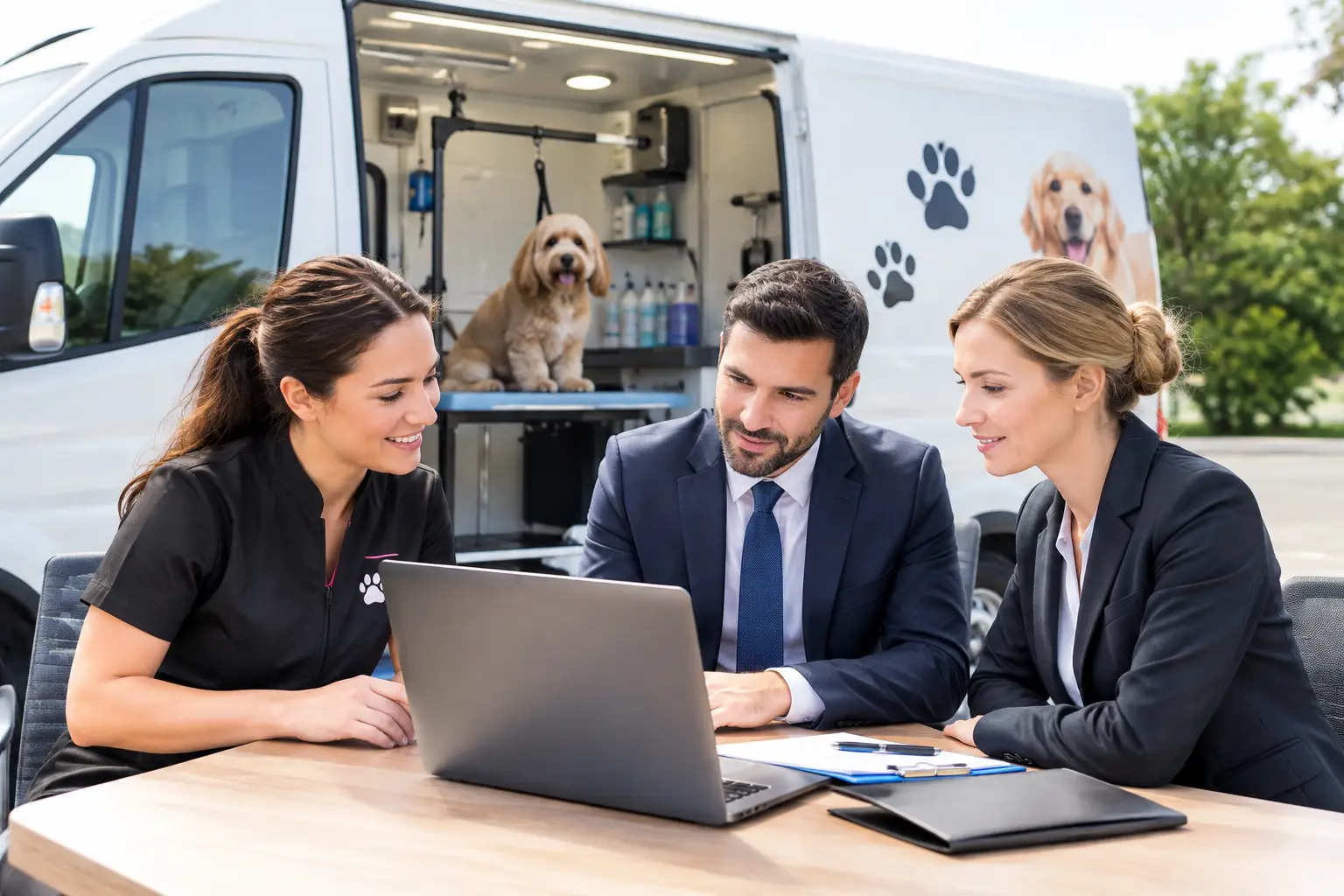
The best grooming vans feel organised because every part of the layout has a purpose. A dog should be able to enter safely, move to the bath, go to the drying area and then onto the grooming table without crossing a cluttered workspace. You should be able to reach towels, shampoos, brushes and tools without constantly bending, stretching or stepping around equipment.
Positioning matters. The bath is usually the largest item and needs secure fitting, accessible plumbing and room to work around it. The grooming table needs clear space on all sides, particularly if you are working with a nervous or larger dog. Dryers should be placed so they are effective without blasting noise and heat directly into a dog’s face.
Storage is often underestimated. You will need clean towels, shampoos, disinfectant, blades, combs, brushes, cleaning products, first-aid supplies, leads and spare consumables. Secure cupboards prevent equipment becoming dangerous projectiles when you brake. Open shelving may look convenient, but enclosed storage is usually cleaner and safer on the road.
Good lighting makes a real difference to the finish of every groom. Natural light is helpful, but you cannot rely on it during a dark winter afternoon. Bright, well-positioned LED lighting helps you check coats accurately and creates a clean, professional environment.
Water, Power and Temperature Are Non-Negotiable
Customers may never ask how your systems work, but they will notice the result. A dog that is washed comfortably in warm water, dried properly and returned looking immaculate is the standard your van must support.
Your conversion needs a fresh-water tank with enough capacity for your expected daily workload, plus a separate waste-water tank. Waste water must be contained and disposed of responsibly. Tank size is a trade-off: more capacity means more appointments before refilling, but water is heavy and affects payload, fuel use and vehicle handling.
A reliable hot-water system is essential. It must provide consistent warm water without taking up unnecessary space or creating avoidable downtime. Power is equally critical. Grooming dryers, clippers, lighting, heating and water systems all place demands on the electrical set-up. Professional installation gives you protection, correct ventilation and systems designed for regular commercial use.
Temperature control matters for both dogs and groomers. In Ireland and Northern Ireland, you may be grooming on a damp, cold morning and then working in a surprisingly warm van later in the day. Insulation, ventilation, safe heating and an effective extraction system help keep the workspace comfortable. This is not a luxury. It supports animal welfare, your own wellbeing and the quality of your work.
Choose Equipment That Earns Its Place
Every item in a mobile grooming van should either help you groom safely, improve the customer experience or make the business more efficient. Cheap equipment can be tempting at the beginning, but unreliable clippers, weak dryers or awkward tables soon cost more in lost time and replacement purchases.
Your core working set-up should include:
- A secure, easy-to-clean grooming bath with suitable restraints.
- An adjustable grooming table that supports safe handling and good posture.
- Professional dryers, clippers and grooming tools suited to a range of coat types.
- Safe cages or holding areas where needed, with proper ventilation and cleaning access.
- A cleaning and sanitising system that can be used between every appointment.
Buy for the dogs you expect to see, not only the small breeds pictured on social media. A practical mobile business needs to cope with muddy spaniels, double-coated breeds, elderly dogs and excitable first-time puppies. Training will help you use the tools properly, but the equipment itself must be fit for daily commercial work.
Build Safety Into Every Detail
A polished van conversion is only worthwhile if it is safe. Floors should be waterproof, non-slip and easy to sanitise. Wall surfaces need to withstand moisture and regular cleaning. Sharp edges, exposed cables and loose fittings have no place in a grooming environment.
Dogs must be restrained appropriately during washing and grooming, but never left unattended in a way that risks injury or distress. Noise levels also need consideration. A powerful dryer is useful, yet a van that feels loud and chaotic can unsettle dogs and make your day harder.
Vehicle safety deserves equal attention. Check payload before adding tanks, equipment and stock. An overloaded van is unsafe, may affect insurance and can lead to expensive problems. Arrange routine maintenance, keep paperwork organised and make daily checks part of your routine. Tyres, lights, water levels, fuel and equipment condition are all easier to manage before the first customer arrives.
Why a Turnkey Van Can Be the Faster Route
You can research vehicles, source equipment, manage tradespeople and design a conversion yourself. Some people do. The trade-off is time, uncertainty and the risk of costly mistakes that only become obvious once you are trying to groom dogs for paying customers.
For someone changing career, recovering from redundancy or finally ready to work for themselves, a turnkey route can remove much of that pressure. Rather than spending months comparing components and hoping everything fits together, you start with a converted van designed around an established working model. You can then focus on learning to groom, building confidence with customers and filling your diary.
This is where franchise support can be particularly valuable. Dial a Dog Wash Ireland equips franchisees with a fully converted grooming van, practical training, marketing instruction and ongoing operational support. You are still building your own business, but you are not left to make every expensive decision from scratch.
Training Turns a Conversion Into a Business
A brilliant van does not replace grooming skill. Customers trust you with a much-loved member of their family, so they expect calm handling, professional advice and a consistent standard of care. You need to understand coat types, skin conditions, safe clipping techniques, dog behaviour, hygiene and customer communication.
Training should also cover the commercial side. A mobile grooming day has to be planned efficiently. Route planning, appointment lengths, pricing, cancellations, repeat bookings and customer follow-up all affect your earnings. The more organised you are, the more dogs you can serve without rushing the job.
You do not need previous grooming experience to begin, but you do need a willingness to learn, practise and follow a proven system. The strongest mobile groomers combine a genuine love of dogs with the discipline of a business owner.
Make Your Van Look Like a Business People Trust
Your van will be seen outside homes, on local roads and in neighbourhoods where word travels quickly. Clean, clear branding reassures customers that a professional has arrived. It also creates local awareness every time you travel between appointments.
Keep the exterior smart and the interior spotless. Customers often make their judgement in the first few seconds, before you have picked up a brush. A clean uniform, a friendly introduction and a well-maintained van signal that their dog is in capable hands.
The right conversion gives you more than a place to wash dogs. It gives you a practical route to independence, repeat customers and a business you can be proud to grow. Choose a set-up built for real working days, invest in proper training and let every appointment prove what your new business can do.