

A Guide to Franchise Due Diligence That Works
24 Nov 2026
A franchise can give you a quicker, more structured route into self-employment than building a business from a blank page. But it is still your money, your time and your future on the line. This guide to franchise due diligence will help you ask the questions that separate a genuine business opportunity from a glossy sales pitch.
For people who are fed up working for someone else, facing redundancy or ready to turn a love of dogs into a proper income, the appeal is obvious. A recognised name, training, equipment and support can remove many of the hardest early hurdles. Due diligence makes sure the system behind those promises is one you understand, can afford and are prepared to follow.
Start with your own goals and numbers
Before examining any franchise, be honest about what you want from it. Are you looking for a hands-on job that gives you control of your day? Are you building a long-term family business? Do you want to work alone initially, or create something that can grow beyond you? Your answers should shape the opportunity you investigate.
Then look at your financial position without wishful thinking. The franchise fee is only one part of the investment. Ask what is included, what you will need to pay for separately, and how much working capital you need while the business becomes established. A mobile dog grooming business, for example, may include a specially converted van, practical training, marketing instruction and branded systems. That can be a strong starting point, but you still need to understand insurance, fuel, vehicle running costs, consumables, tax, personal drawings and contingency funds.
A good franchisor should be comfortable showing you the full set-up costs and ongoing payments early. If figures are vague, rushed or only discussed after pressure to commit, slow down. Transparency is not a favour. It is the minimum standard for a serious business relationship.
Read the franchise documents properly
You do not need to become a solicitor, but you do need to read every document and get independent professional advice before signing. The franchise agreement sets out what you are buying, what you must do and how the relationship can end. It is not paperwork to skim once you have decided you like the idea.
Pay particular attention to the term of the agreement, renewal conditions, notice periods and any restrictions that apply if you leave. Check whether there are minimum performance expectations, required operating hours, rules around suppliers and limits on selling the business in future. A franchise should provide structure, but you must be clear on where the franchisor’s control begins and ends.
Ask for a plain-English explanation of fees. Establish whether there is an initial franchise fee, a monthly management fee, marketing contribution, software charge or other regular payment. Find out how and when those figures can change. The right opportunity does not hide behind complicated wording.
Get independent advice, not just reassurance
A franchise solicitor and accountant are worthwhile investments. They can help you understand the agreement, assess the tax position and test whether projected income is realistic for your circumstances. Their role is not to talk you out of a business you want. Their role is to make sure you go in with your eyes open.
Test the demand in your proposed territory
Territory matters because your customers need to exist where you operate. If the franchise offers territorial exclusivity, ask precisely what that means. Is the area defined by postcode, town, county or another boundary? Can another franchisee work nearby? What happens when customers move, and how are online enquiries allocated?
Do your own local research as well. Look at the number of households, dog ownership, competing groomers, local pricing and how far people may be willing to travel for a service. A mobile model can be particularly attractive to busy owners, older customers and households with more than one dog because the service comes to them. Still, convenience alone does not guarantee demand in every patch.
It also helps to understand seasonality. Grooming is a repeat service, which can create regular customer relationships, but appointment patterns, coat types and local competition all influence weekly takings. Ask how the franchise supports local lead generation, not simply national brand awareness.
Speak to franchisees and listen carefully
Existing franchisees are among the most useful sources of insight, especially when you speak to more than one. Ask the franchisor for contact details, then prepare sensible questions in advance. You want the reality of the working week, not only the best month they have ever had.
Ask how long it took them to build a reliable client base, what training was like, how often they use head office support and whether marketing delivers useful leads. Find out what surprised them about the work. Mobile dog grooming can be rewarding, active and highly personal, but it also involves managing a diary, travelling between appointments, handling dogs safely and providing excellent customer service every day.
Ask about earnings carefully. One person’s revenue is not your guaranteed income. Their territory, hours, experience, personal spending and work ethic may be different from yours. Look for patterns across several franchisees rather than making a decision based on one impressive figure or one difficult story.
A credible network will include people at different stages: new starters, established operators and perhaps franchisees who have expanded. Their answers should be consistent with the franchisor’s claims, while still leaving room for individual experience.
Examine training, equipment and ongoing support
A franchise system is only as valuable as the support you can actually use. If you have no grooming experience, practical training is not an optional extra. You need to know how long it lasts, whether it is one-to-one or group-based, what breeds and coat types you will work with, and how you are assessed before serving paying customers.
Training should cover more than grooming technique. The strongest programmes also address dog handling, welfare, customer care, bookings, pricing, route planning, hygiene, sales and local marketing. You are not buying a job. You are taking responsibility for a business, so commercial skills matter just as much as confidence with dogs.
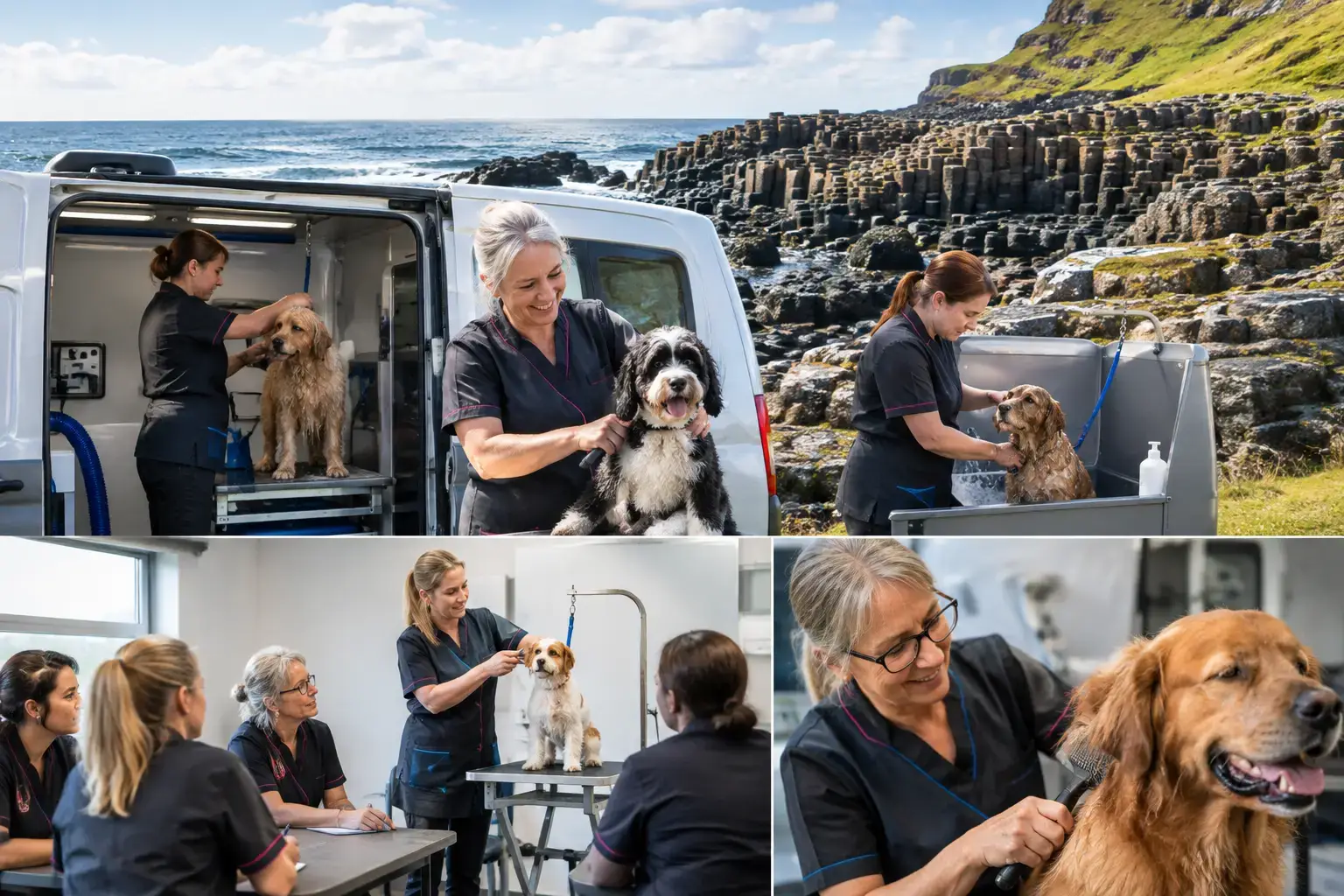
Inspect the equipment where possible. In a mobile franchise, look closely at the van conversion, bathing facilities, drying equipment, storage, safety features and maintenance arrangements. Ask who owns the vehicle, what happens if it needs repairs and whether there is a replacement plan if you are off the road. A van that cannot operate cannot generate revenue.
Ongoing support should be specific. “We are always here” sounds reassuring, but ask who answers the phone, how quickly, and what assistance is available when you have a difficult dog, a customer complaint, a marketing issue or an operational problem. Dial a Dog Wash Ireland, for example, puts practical training, equipped vans and continuing support at the centre of its model. Your task is to test exactly how those elements work in practice for a franchisee.
Build conservative financial projections
Create three versions of your forecast: cautious, expected and ambitious. Base them on the number of appointments you can realistically complete, average spend, no-shows, travel time and regular operating costs. Do not assume a fully booked diary from week one.
Work out your break-even point: the number of grooms or the level of weekly sales needed to cover business costs and pay yourself. This figure turns vague optimism into a practical target. If the cautious version leaves no room for setbacks, you may need more working capital, a different territory or a different opportunity.
Be wary of anyone who promises effortless earnings. A proven model can shorten the learning curve, but franchise success still depends on following the system, delivering excellent service and working consistently. The right franchisor will build confidence without pretending there is no work involved.
Make the decision when the evidence stacks up
Good due diligence is not about finding a franchise with zero risk. No business can offer that. It is about replacing assumptions with evidence and choosing a risk you understand.
When costs are clear, the agreement has been independently reviewed, franchisees speak positively about the real experience, the territory has demand and the support is practical, you can move forward with far more confidence. Take your time, ask the awkward questions and choose the business that gives you both a proven framework and a future you are genuinely excited to build.