


How to Finance Franchise Fees Without Stalling
28 Jul 2026
A franchise opportunity can look like the fresh start you have been waiting for - working with dogs, building your own customer base and taking control of your earning potential. But the question of how to finance franchise fees can stop good people before they even make an enquiry. It should not. The right answer is rarely one big pot of money. It is a sensible funding plan that protects your cash flow and gives your business room to grow.
For an aspiring mobile dog groomer, the aim is not simply to find the cheapest finance available. It is to fund the right setup properly: your franchise fee, training, fitted grooming vehicle, equipment, launch marketing and enough working capital to operate confidently from day one.
Start by understanding what you are financing
A franchise fee is only one part of your startup investment. Before approaching a lender, ask for a full written breakdown of what is included and what sits outside the initial price. A strong franchise package may cover specialist training, a converted mobile grooming van, professional equipment, branding, Full ongoing support and access to an established operating system. That is very different from paying a fee for a name and being left to work everything else out alone.
You also need to budget for the costs that keep the business moving in its first few months. Fuel, insurance, vehicle running costs, grooming consumables, phone bills and your own personal drawings all matter. A lender will want to see that you understand this, but more importantly, so should you.
Do not borrow every pound or euro you can access just because it is available. Keep a cash buffer. New businesses often receive income quickly, particularly where there is demand for regular dog grooming, but invoices, direct debits and unexpected repairs do not wait for the perfect week.
How to finance franchise fees with a blended plan
For many new franchisees, the most realistic route is a combination of personal investment and external funding. Putting in some of your own money shows commitment, reduces the amount borrowed and can make monthly repayments more manageable. It does not mean you need to have the entire startup cost sitting in a savings account.
Your finance plan may combine savings with a bank loan, credit union borrowing or asset finance for the grooming van and equipment. Each route has a different purpose, cost and level of flexibility. The key is matching the finance to the asset or expense it is paying for.
Personal savings and redundancy funds
Savings are often the cleanest source of startup capital because there are no repayments or interest charges. If you have received a redundancy payment, it can provide a practical foundation for a career change rather than being gradually absorbed into household spending.
Still, avoid placing every available penny into the business. Keep personal emergency savings separate where possible. Self-employment is exciting, but it is also your responsibility to plan for quieter periods you may experience, vehicle maintenance and life outside the business.
Bank or credit union business loans
A business loan can help cover the upfront franchise fee, training costs or working capital. Banks and credit unions will usually look at your credit history, available deposit, projected income and ability to repay. They may also ask about the franchise model, the experience of the franchisor and what support is provided.
This is where joining an established system can strengthen your case. A lender is more likely to take your plan seriously when it is based on a clear service, practical training and a proven route to customers rather than a vague idea for a business, a recognised brand a lender can usaually see as a good investment and a lower risk for lending.
Compare the total repayment amount, not just the monthly figure. A longer term can ease pressure on early cash flow, but it may cost more in interest overall. Ask whether overpayments are allowed and whether there are penalties for settling early.
Asset finance for a grooming van and equipment
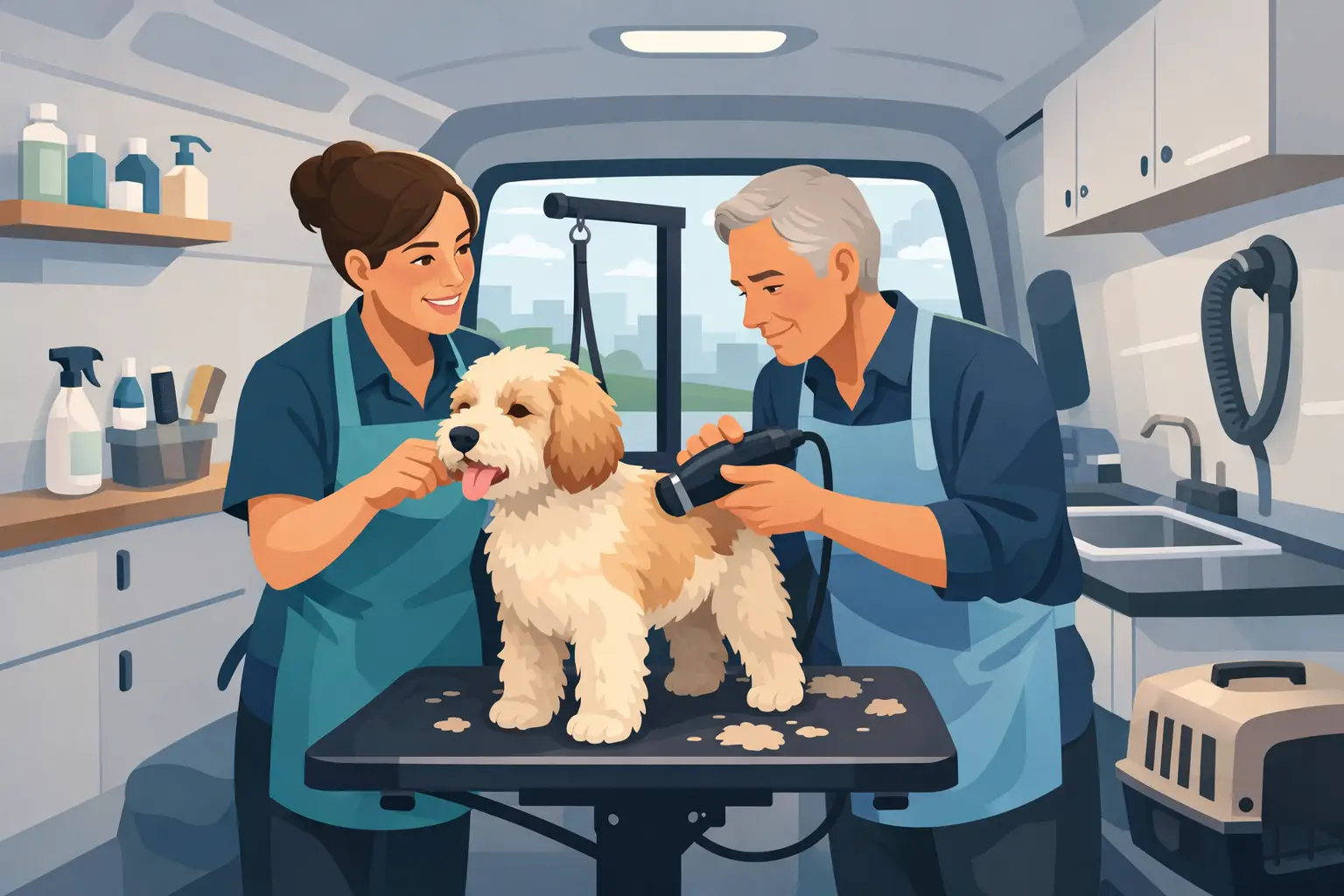
A fully fitted mobile grooming van is a working asset. It generates income, carries your equipment and allows you to serve customers at their homes without the overheads of a salon premises. That makes asset finance worth investigating.
With hire purchase or lease-style arrangements, the finance is tied to the vehicle or equipment rather than funded as unsecured borrowing. This can preserve more of your cash for launch costs and working capital. However, terms vary widely, and you must be comfortable with the monthly commitment even during slower weeks.
Check exactly what you own at the end of the agreement, what happens if the vehicle needs major repairs and whether insurance requirements affect the cost. Good finance should support your business, not create a burden that makes every booking feel like a race to cover repayments.
Family support and private lending
Some people receive help from family members who believe in their plans. This can be a useful supplement, particularly for a deposit or smaller startup expense, but treat it professionally. Agree whether it is a gift, a loan or an investment. Put repayment dates and expectations in writing.
Mixing money and family without clear boundaries can create strain. A straightforward agreement protects everyone and lets you focus on building the business.
Grants and local enterprise support
Depending on where you live, there may be enterprise supports, training schemes or startup programmes available through local organisations. Availability and eligibility can change, especially between Ireland and Northern Ireland, so never build your whole plan around a grant you have not been approved for.
Think of grants as a possible contribution, not guaranteed startup funding. If one becomes available, it may help with training, marketing or equipment. Your core plan should still stand on its own.
Prepare the numbers before you apply
You do not need a business degree to present a convincing finance application. You do need honest figures and a plan you can explain clearly. Start with the total startup cost, the amount you are investing personally, the amount you need to borrow and the purpose of each element.
Then map out realistic monthly trading. Estimate how many dogs you can groom per day once you are trained and operating confidently, your average price per appointment, and the number of working days each week. From that turnover, subtract your regular costs and proposed finance repayments.
Be conservative. Do not base affordability on a fully booked diary from week one. Build a gradual ramp-up into your forecast and include quieter weeks. A cautious forecast that you can exceed is far more useful than an exciting figure that leaves no room for real life.
A lender or adviser may ask for:
- a breakdown of franchise and setup costs
- evidence of your savings or deposit
- projected income and monthly outgoings
- your personal bank statements and credit information
- details of the franchise training, support and territory
- a clear explanation of your relevant experience and motivation
Your previous job does not need to be in grooming. Mature applicants, career changers and people leaving employment after redundancy can bring discipline, customer service skills, reliability and a strong work ethic. What matters is showing that you understand the commitment and are prepared to follow a proven process.
Protect your household while you build
The biggest mistake is focusing only on whether you can get approved. The better question is whether the repayment level leaves you enough breathing space to operate and live, then thrive.
Before signing anything, test your budget. What happens if bookings take two months longer to build than expected? What if the van is off the road for a few days? What if household bills rise? A mobile grooming business has the advantage of taking the service to the customer, but it still needs sensible reserves and proper insurance.
If the numbers feel tight, do not force the deal. Consider increasing your deposit, reducing personal spending for a defined period, choosing a different funding mix or waiting until you have a stronger cash buffer. Delaying a launch by a short time can be wiser than beginning under avoidable financial pressure.
Choose a franchise that makes the investment work harder
Cheap is not always affordable. A lower upfront fee can become expensive if it leaves you sourcing your own vehicle, finding training, creating a brand, learning marketing by trial and error, not getting the right support in those initial weeks and months, and attempting to win customers with no support.
A turnkey model gives your investment more jobs to do. With Dial a Dog Wash Ireland, the focus is on getting committed dog lovers trained, equipped and ready to trade through a structured mobile grooming model, rather than leaving them to piece together a business alone. That support does not remove the need for good financial judgement, but it can reduce the costly uncertainty of starting from scratch.
Ask direct questions before committing. What does the fee include? What ongoing costs apply? What practical training will you receive? How is marketing handled? What support is available after launch? The answers should be specific, not vague promises.
Finance is not the obstacle between you and self-employment. Unclear numbers are. Build a realistic plan, choose funding you can live with and invest in a business model that gives you a genuine route to earn quickly. The sooner your finances make sense on paper, the sooner you can put your energy into the dogs, customers and future you want to build.