

How Long Is Grooming Training? A Faster Route
16 Aug 2026
You do not need years in a classroom before you can build a business working with dogs. If you are asking, how long is grooming training, the honest answer is that it depends on the route you choose, the standard you want to reach and how quickly you can turn hands-on learning into confident daily work.
For someone who wants a complete career change, the right training is not simply about collecting hours. It is about learning the practical skills that allow you to safely groom dogs, manage clients, work efficiently and start charging for a service people need. That is why intensive, one-to-one training can be a far more direct route than a long, largely theory-based course.
How long is grooming training for a new career?
Dog grooming training can range from a few weeks of intensive practical tuition to many months, or even longer, on a part-time college-style programme. Neither option is automatically right or wrong. The best choice comes down to your goal.
If you want to study grooming as a personal interest, take your time and pursue formal qualifications at a gradual pace, a longer programme may suit you. If your aim is to become self-employed and begin operating a mobile grooming business as soon as you are properly prepared, focused practical training is usually the stronger option.
A fast-track programme is built around the work you will actually do: bathing, drying, brushing, clipping, scissoring, handling different temperaments, speaking to owners and keeping appointments moving. You learn by grooming real dogs under close guidance of the types and breeds of dogs with the conditions that you are likelt to face out in the real world of grooming, not by spending weeks memorising material you may rarely use once you are trading.
The key question is not, ‘How long can I spend training?’ It is, ‘What do I need to know to deliver a safe, professional service with confidence?’ For a motivated person with strong coaching and daily practical exposure, that point can arrive much sooner than many people expect.
What affects the grooming training timeline?
Your previous experience with dogs matters, but it is not the deciding factor. Plenty of successful groomers begin with no grooming background at all. A calm manner, willingness to listen, physical stamina and a genuine interest in dogs will take you a long way.
The biggest factor is the type of tuition. Watching demonstrations is useful, but it is not enough on its own. Grooming is a practical trade. You need to feel how to hold the clippers, understand how different coats respond, recognise when a dog is uncomfortable and build the judgement to adapt a groom safely.
Training also takes longer if it covers every possible breed style in depth before you ever work with customers. That may sound thorough, but it can delay the point at which you are ready to earn. A business-focused course should teach strong foundations first, then give you a clear system for continuing to develop as you work.
Your own availability makes a difference too. Someone who can commit fully to an intensive course will progress faster than someone attending occasional sessions around a full-time job. That does not mean you need to be a natural from day one. It means repetition, feedback and focused effort matter.
What should practical grooming training include?
Speed should never mean cutting corners. The aim is to remove wasted time, not the essential learning that protects dogs, customers and your reputation. Before committing to any training route, look closely at what you will actually be taught and how much time you will spend working with dogs.
A worthwhile practical programme should cover the full customer appointment, from the first greeting through to handing back a clean, comfortable dog. That includes coat and skin checks, safe bathing and drying, nail care, ear cleaning where appropriate, brushing out knots, clipping, scissor work and finishing presentation.
You also need confidence around behaviour. Dogs do not arrive as identical textbook examples. Some are nervous, some are excitable, some dislike dryers and some have not been groomed for months. Learning safe handling and knowing when to slow down is just as valuable as producing a tidy trim.
Business know-how deserves equal attention. A talented groomer without customers has a hobby, not a business. Training that includes pricing, booking management, local marketing, customer communication, hygiene procedures and daily planning gives you a much better start.
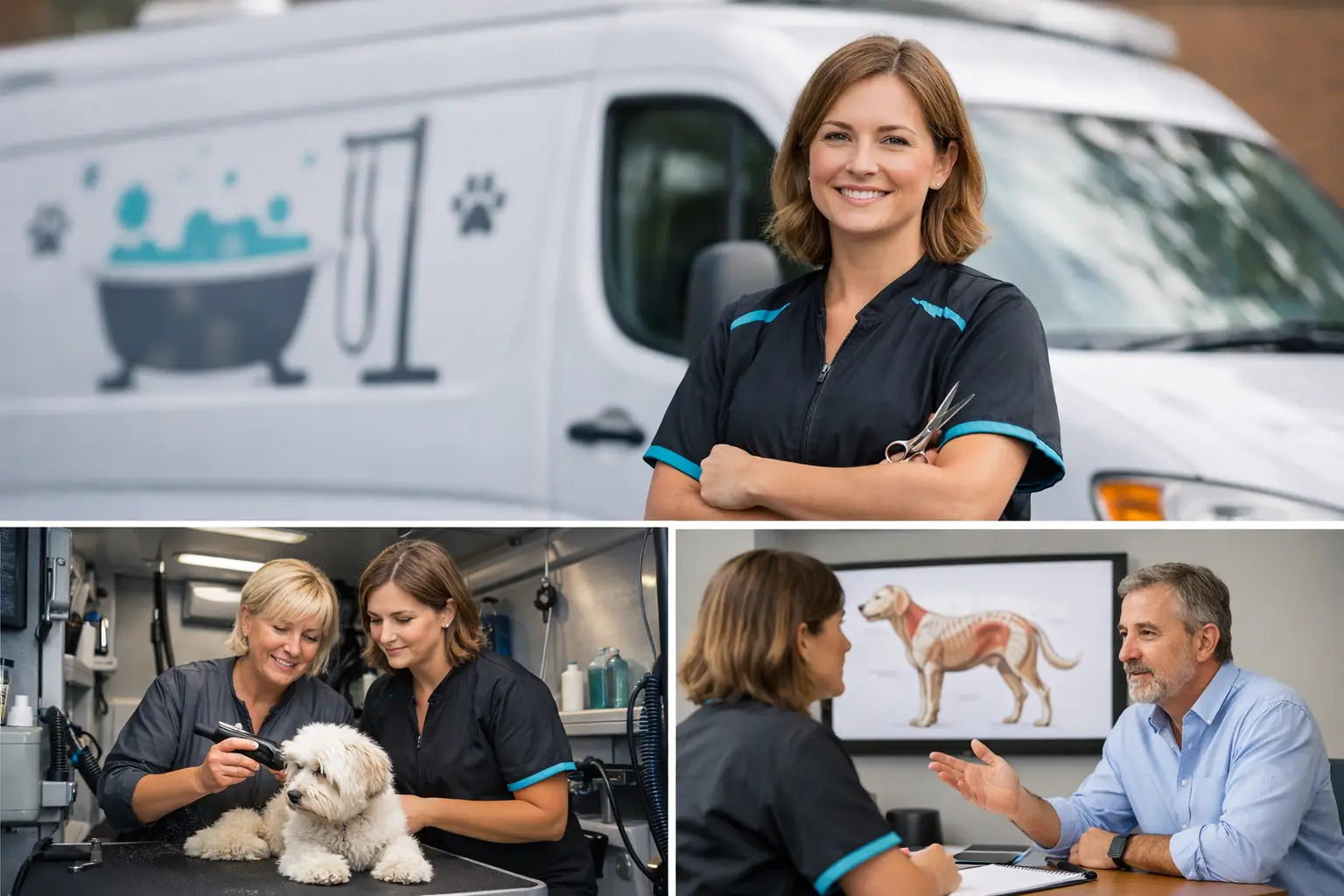
For a mobile groomer, there is another layer: operating efficiently in a purpose-built grooming van. You need to understand the equipment, water systems, power, cleaning routines and how to provide a professional experience at a customer’s home. This is very different from simply learning to groom in a salon environment.
Fast-track training versus a longer qualification
There is a real trade-off here. A longer qualification can offer a broad syllabus and may appeal if you enjoy academic assessment or want to work towards particular credentials. It can also fit people who are unable to step away from their current role immediately.
However, longer does not always mean more useful for a new business owner. If most of your time is spent on assignments, written work or waiting between weekly sessions, you may take longer to gain the confidence that comes from grooming dogs repeatedly.
Fast-track, practical training asks more of you in a shorter period. It is intensive. You must be ready to learn, accept direct feedback and practise the same core skills until they become natural. In return, you can move from career-change idea to operational business much faster.
The strongest route combines concentrated initial training with support after you begin. Nobody learns every breed, coat type or customer situation in one course. What matters is having a proven process, access to experienced people and ongoing guidance while your ability and client base grow.
When can you start earning after grooming training?
You can start earning once you are competent to deliver a safe, reliable service and have the right business foundations in place. Those foundations include suitable equipment, insurance, a clear pricing structure, a way to take bookings and a plan for finding customers.
This is where many independent trainees lose momentum. They finish a course but then face the cost of fitting out premises, buying equipment, developing a brand and trying to generate local demand alone. The training may be complete, but the business is still not ready.
A franchise route can reduce that gap significantly because the training is connected to a complete operating model. With Dial a Dog Wash Ireland, franchisees receive one-to-one practical grooming tuition alongside the equipped mobile grooming van, marketing instruction and continuing operational support needed to take the next step with purpose.
That structure is particularly valuable if you are leaving employment, facing redundancy or simply tired of building somebody else’s future. Instead of trying to piece together every part of a new venture, you can focus on becoming capable, confident and ready to serve customers.
Is grooming training realistic at 50 or beyond?
Absolutely. Starting a business later in life can be a genuine advantage. Mature career changers often bring customer service experience, resilience, responsibility and the discipline to follow a proven system. Clients value a groomer who is reliable, professional and good with their dog - not one who started at a certain age.
The work is hands-on, so it is sensible to be honest about fitness and mobility. Grooming involves standing, lifting where safe to do so, bending and managing an active day. Good equipment, sensible working practices and effective appointment planning all help, but this is a practical service business and should be treated as such.
What matters most is motivation. If you enjoy dogs, want more control over your working life and are prepared to learn a valuable skill, age does not need to be the reason you stay in an unfulfilling job.
Choose training that gets you business-ready
Do not judge grooming training by the number of weeks alone. Ask whether you will leave able to groom safely, communicate professionally, manage a full appointment and operate a business that can attract customers. Ask how much real practical work you will do, who will support you after training and what happens between finishing the course and opening for bookings.
The fastest route is not the one that rushes you. It is the one that teaches the right skills, gives you the right tools and puts a clear business system behind your ambition. If working with dogs and working for yourself has been on your mind for years, the most useful next move is to find out what focused, practical training could make possible.