

How Franchise Training Works for New Owners
27 Jul 2026
Starting your own business should not mean spending months guessing what to do first. That is why understanding how franchise training works matters before you commit. The right training does more than teach a practical skill. It shows you how to deliver a service confidently, run your diary, speak to customers, promote your business and begin earning quickly from a proven model.
For many people considering a mobile dog grooming franchise, the attraction is straightforward: you can turn a love of dogs and a desire for independence into a business without needing previous grooming experience or a salon premises. But enthusiasm alone is not a business plan. Franchise training is the bridge between wanting a different future and being properly prepared to deliver it.
How Franchise Training Works in Practice
Franchise training is usually built around one clear objective: getting you ready to operate your own business to a professional standard as quickly as possible. It combines practical instruction with the commercial knowledge that first-time business owners need.
In a strong franchise model, you are not handed a folder of information and left to work it out alone. Training is structured, intensive and focused on the jobs you will actually carry out once you are on the road. You learn the system behind the brand, then practice it until the routine begins to feel natural.
For a mobile dog grooming business, that means learning how to handle dogs safely and calmly, use professional equipment, carry out washes and grooming treatments, and maintain high standards of hygiene inside the van. You also need to understand how to assess each dog, manage owner expectations and recognise when a treatment is not appropriate without veterinary advice.
The practical side is vital, but it is only one part of the picture. A franchisee also needs to know how to price services, manage bookings, plan efficient travel routes, deal with cancellations and turn a good first appointment into a regular customer. Training should cover these everyday realities from the start.
Practical grooming comes first
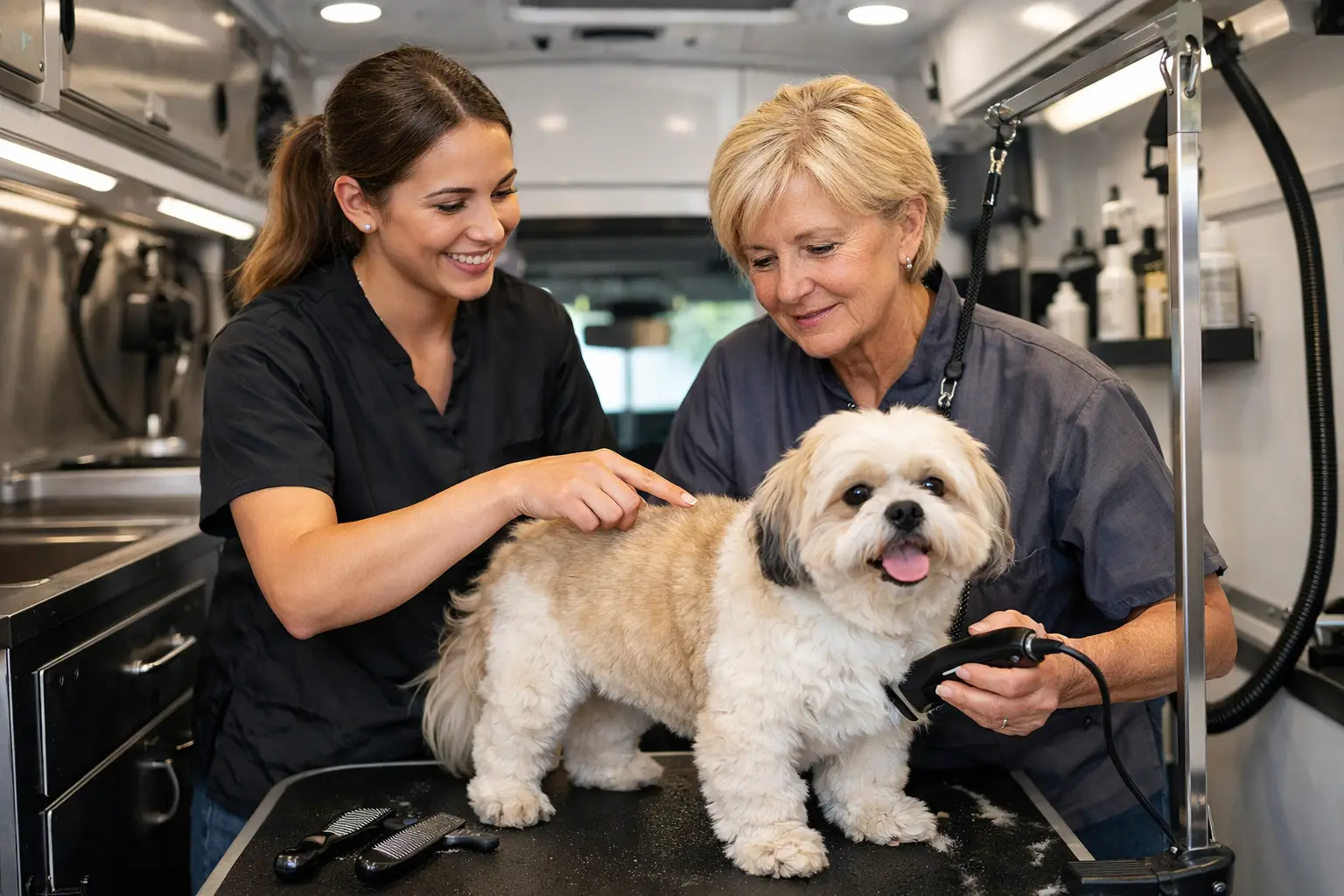
If you have never worked as a groomer before, hands-on training is where confidence is built. Reading about dog handling is very different from doing it with a real dog in front of you. You need supervised experience, clear demonstrations and the chance to ask questions as you learn.
Training normally begins with the essentials: welfare, safe restraint, bathing, drying, brushing, clipping, nail care and cleaning the working area. You learn that every dog is different. A relaxed short-haired pet and a nervous, matted coat require different handling, timings and conversations with the owner.
Good trainers do not pretend every appointment will be easy. Some dogs are anxious, some are excitable and some need a slower approach. The purpose of practical instruction is not to make you an instant expert in every breed. It is to give you sound methods, professional boundaries and the confidence to make sensible decisions.
One-to-one training can be especially valuable here. It allows instruction to be tailored to your pace, rather than expecting you to keep up with a large class. That matters for career changers who may be learning a completely new trade while also getting used to the idea of becoming self-employed.
You learn the business behind the grooming
A franchise is not simply a course followed by a van key. The training should explain how the business model works and what is expected of you as the owner.
This includes understanding your exclusive territory, the booking process, customer service standards and the brand presentation customers expect. You may be trained to use booking systems, take payments, record customer details and follow policies designed to protect both dogs and the business.
Marketing instruction is another essential part. A recognisable brand can give you a head start, but local awareness still needs to be built. You need to know how to introduce your service in your territory, respond to enquiries quickly, encourage referrals and keep regular customers returning.
For someone leaving employment after redundancy or years in a role they no longer enjoy, this knowledge can remove a great deal of fear. You are still responsible for your own effort, diary and standards, but you are not starting with a blank page. There is a process to follow, practical support to draw on and a business format already designed for the market.
From Training Room to First Paying Customers
The real test of training is what happens once you start trading. A worthwhile programme prepares you for the first few weeks rather than treating the final training day as the finish line.
Before launch, a mobile grooming franchisee should be introduced to the vehicle and equipment they will use daily. A fully converted van is your workplace, your transport and a visible advert for the business. You need to know where everything belongs, how to keep it clean, how to work safely in a compact space and how to create a calm experience for each dog.
There is also a practical rhythm to learn. You will check your schedule, travel to appointments, greet customers, groom dogs, take payment, clean down and move to the next booking. At first, this can feel like a lot to manage. With repetition and support, it becomes an efficient routine.
Early bookings are important because they turn training into real experience. The aim is not merely to get busy for one week. It is to build a dependable customer base that books repeatedly and recommends you to friends, neighbours and family. Reliable service, clear communication and consistently good care are what build that base.
This is where the franchise structure can be a major advantage over going it alone. Instead of choosing equipment, creating a service process, designing marketing materials and building credibility from scratch, you begin with established tools and guidance. The trade-off is that you must follow the franchise system and uphold its standards. For many new owners, that structure is exactly what makes the move into self-employment feel manageable.
Support Does Not Stop When You Launch
The strongest franchise training is followed by ongoing operational support. No training programme can cover every situation you will face in business, particularly when you are working with animals and dealing with the public.
You may need advice on a difficult grooming query, a customer complaint, a quiet patch in bookings or the best way to manage a growing diary. Having experienced people available can save time, reduce costly mistakes and help you stay focused when a problem appears.
At Dial a Dog Wash Ireland, the purpose is to help committed people move from complete beginner to capable business owner through fast-track practical training, a prepared mobile grooming set-up and continued guidance. The system is designed to get franchisees out serving customers quickly, while giving them the backing to grow with confidence.
Ongoing support is not a substitute for effort. You still need to show up on time, care properly for every dog, answer calls, market your service locally and take responsibility for your results. What it does provide is experienced direction when you need it, rather than forcing you to learn every lesson the hard way.
What to ask before choosing a franchise
Not every franchise training programme is equally hands-on, so ask direct questions before you sign anything. Find out how long the training lasts, whether you will work with real customers dogs, what business and marketing instruction is included, and who will support you after launch.
Ask what equipment and vehicle preparation are provided, how your territory is defined and what you are expected to do to generate local demand. It is also sensible to ask what a typical working day looks like, how franchisees manage their diaries and what challenges new owners commonly face in the first year.
Be wary of vague answers or promises that suggest success happens without work. A proven system can shorten the learning curve, but the best results come from combining that system with energy, reliability and a willingness to keep improving.
Age and background do not have to hold you back. People in their fifties and beyond often bring customer service experience, resilience and the discipline needed to run a dependable local business. Equally, younger career changers may value the opportunity to build something of their own without waiting years to gain every skill independently.
The key question is not whether you have groomed dogs before. It is whether you are ready to learn, follow a proven process and take ownership of the opportunity in front of you. With practical training, the right equipment and proper support behind you, self-employment can become a realistic next move rather than a distant idea.