

One to One Grooming Training for a Faster Start
15 Jul 2026
A dog does not care whether you have spent years in an office, worked shifts, raised a family or are starting again at 45+. It needs a calm, capable groomer who understands how to handle it safely and leave it looking its best. That is why one to one grooming training can be such a powerful first move for people who want a practical route into self-employment.
For aspiring mobile groomers, learning in a busy group classroom can feel like trying to learn to drive from the back seat. You may watch plenty, but you do not necessarily get enough hands-on time, direct feedback or confidence to work alone. Focused individual one to one training changes that. It puts your progress, your questions and the skills you need to earn from at the centre of the programme.
Why one to one grooming training works
Dog grooming is not a skill you learn properly by memorising breed charts or watching online clips. You learn it through repetition: holding a nervous dog correctly, reading its body language, choosing the right tools, working safely around sensitive areas and knowing when a coat needs a different approach.
In one-to-one sessions, the trainer can see precisely where you are getting stuck. Perhaps your scissor work needs more control. Perhaps you are taking too long on preparation, or feeling hesitant when clipping around feet and faces. Instead of trying to keep pace with a whole group, you receive immediate coaching and repeat the task until it begins to feel natural.
That concentrated attention matters even more if you have no grooming background. You do not need previous salon experience to begin, but you do need a training environment where it is safe to ask basic questions, make mistakes and build practical judgement without embarrassment.
The skills that turn training into a service
A good training programme should not leave you with a certificate and a vague idea of what comes next. It should prepare you for the real work and the real world that arrives when a customer opens the door with a muddy Cockapoo, a moulting Labrador or a matted terrier that has not enjoyed its last grooming visit.
The foundation starts with dog handling and welfare. You need to understand how to introduce yourself to each dog, keep it secure without causing distress, spot signs of anxiety and work at a pace that protects both the animal and you. Grooming is physical work, and safe lifting, sensible positioning and controlled equipment use are not optional extras.
From there, practical one-to-one grooming training should cover bathing, drying, brushing, de-shedding, clipping, scissoring, nail care and ear hygiene. The most valuable learning happens when these tasks are taught as one complete groom rather than as isolated demonstrations. A beautiful finish is difficult to achieve if the coat has not been washed, dried and prepared properly first.
You also need to learn consultation skills. Customers will ask what style suits their dog, whether matting can be removed, how often they should book and why a full groom takes time. Clear, professional answers create trust and help you manage expectations before the appointment begins.
Fast training does not mean rushed training
People changing career often want to get moving quickly. That is understandable. If you have been made redundant, are tired of working for someone else or simply want your income to reflect your effort, you do not want to spend years waiting before you can start building a business.
Fast-track training can be the right choice, provided it is intensive and practical rather than superficial. The aim is not to turn someone into an expert in every breed overnight. Even highly experienced groomers continue learning throughout their careers. The aim is to give a committed beginner the safe, commercial skills and confidence to begin offering a reliable service, then improve with every dog groomed.
Your own pace will still matter. Someone who is comfortable working with dogs, listens carefully and practises between sessions may progress rapidly. Someone who is nervous around animals or has never used grooming tools may need more time on certain techniques. The right trainer adjusts the coaching while keeping standards high.
Training for a mobile grooming business
Learning to groom is one part of the opportunity. Learning how to run a mobile service is what helps turn that skill into an income, and with the right opportunity, earn a great income directly from training.
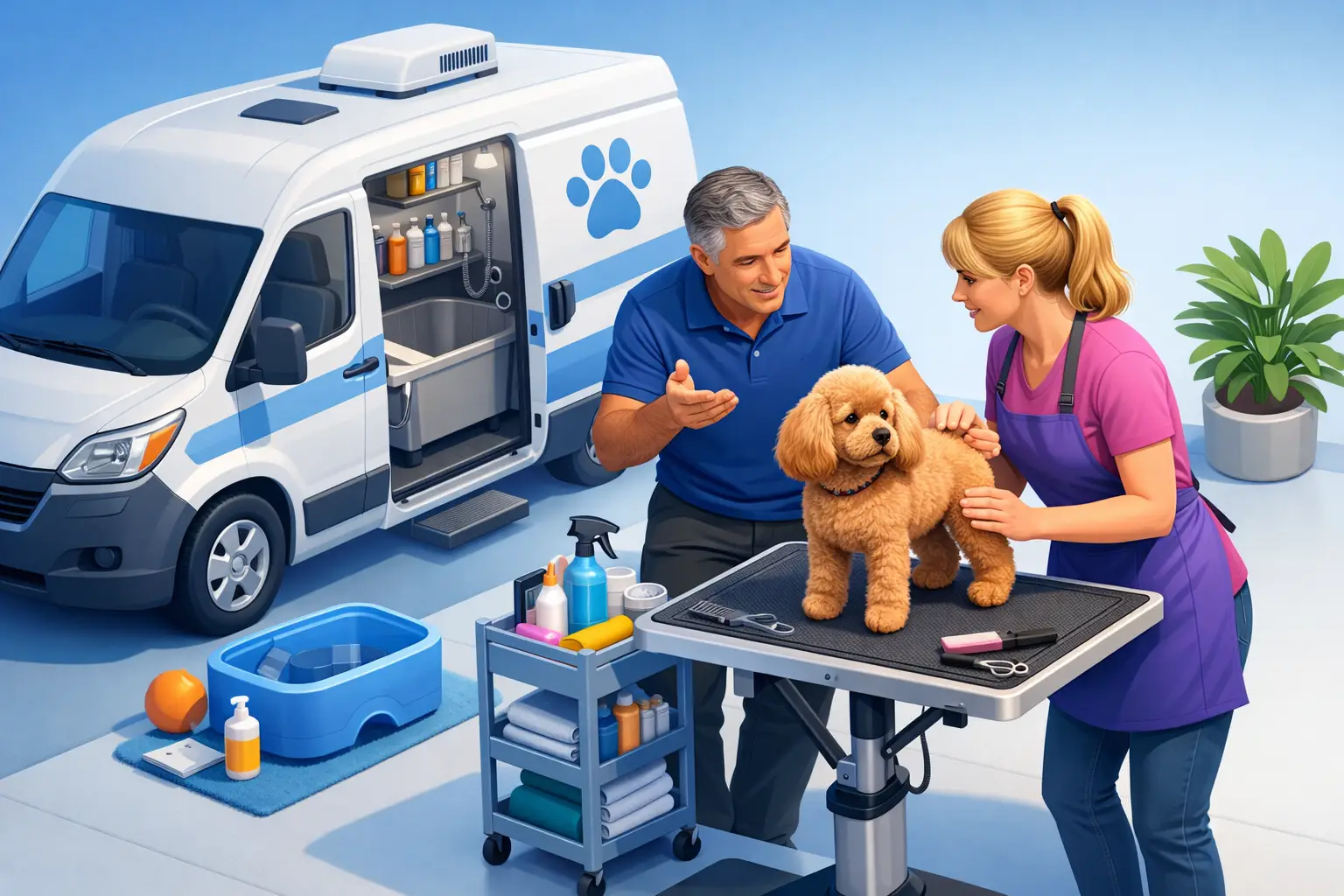
A mobile grooming van is not simply a salon on wheels. It has its own working rhythm. You need to organise the space, prepare effective lotions and equipment, keep tools clean, manage appointments efficiently and maintain a professional experience on every driveway. Customers value the convenience, but they still expect excellent care, punctuality and a polished result.
This is where franchise-led training offers a major advantage over trying to piece everything together alone. Alongside practical grooming instruction, you can learn the everyday systems behind a service business: booking customers, planning your day, handling payments, setting standards, promoting your service and encouraging repeat appointments.
At Dial a Dog Wash Ireland, the focus is on helping motivated people move from beginner to business owner with practical training, a fully equipped mobile grooming format and ongoing support. For a person who wants independence but does not want to gamble their savings on building a brand, sourcing equipment and finding customers from scratch, that structure can remove a great deal of early uncertainty.
What to look for before you commit
Not all grooming courses are built for people who want to earn a living. Before choosing one-to-one grooming training, ask direct questions about how much practical work you will do yourself. Watching a trainer groom several dogs is useful, but it is not the same as putting your own hands on the tools.
Ask whether you will work with different coat types, temperaments and sizes of dogs. A gentle small dog is a sensible place to start, yet real customers will bring variety. Your training should give you the judgement to adapt rather than rely on one routine for every dog.
It is also worth asking what happens after the formal training ends. A new groomer will encounter unfamiliar coats and challenging moments. Access to an experienced person who can offer guidance is valuable, particularly in the early months when confidence is still growing.
Finally, look beyond the grooming table. If self-employment is your goal, find out whether the course covers the commercial side of the work. Technical ability matters, but regular bookings, good customer communication and organised operations are what make a grooming business sustainable and thrive.
Confidence comes from doing the work
There is a common fear among career changers: “What if I am not naturally good at it?” The honest answer is that grooming demands patience, care and willingness to practice. It is not effortless. You will have days when a coat takes longer than planned or a dog tests your composure.
But confidence is not something you wait to feel before acting. It is built through structured training, repeated practical work and the support to keep improving. Many successful groomers started with a franchise with nothing more than a love of dogs and the determination to create a better working life for themselves.
For mature career changers especially, experience from previous jobs often becomes an advantage. Reliability, customer service, discipline and the ability to stay calm under pressure all matter in this business. Starting a new chapter is not about pretending you are 25 again. It is about using what you already know while gaining a valuable new skill.
A route to work that feels more like yours
One-to-one training gives you more than a close-up view of grooming techniques. It gives you the chance to ask, practice, improve and prepare for the reality of serving paying customers in the real world with real pets. For the right person, it can shorten the distance between wanting a different life and taking practical steps towards it.
If working with dogs, managing your own day and building something you can be proud of appeals to you, do not dismiss the idea because you have never groomed before or your age. The right training and support can turn motivation into a working skill - and a working skill into a business that is genuinely yours and worthwhile.